

Empowering Youth Through SOAR: Education as Protection
This year’s Stop the Sexual Exploitation of Children & Youth Week (March 9-15) reminded us that protecting young people begins with equipping them with the knowledge, trust, and language to speak up.
Kicking Off Awareness Week with a Provincial Webinar
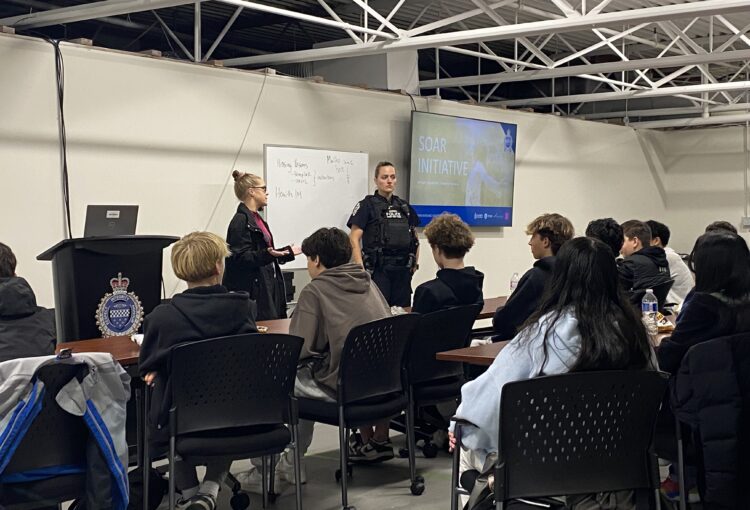
On the first day of awareness week, Surrey Women’s Centre joined Surrey Police Service and community partners for a webinar reaching policy analysts and frontline service providers across British Columbia. The goal was clear: expand awareness of the S.O.A.R. Initiative (Strength, Opportunity, Autonomy, Resilience) and share what trauma-informed youth education can look like in practice.
S.O.A.R. is an interactive youth safety program for students in Grades 6 to 10, developed by SPS’s Youth Services Unit in partnership with Surrey Schools, Surrey Women’s Centre, and Pacific Community Resources Society (PCRS). Since launching in June 2025, it has reached nearly 5,000 students across Surrey.
From “Scare Straight” to Strength-Based Education
One of the most important shifts S.O.A.R. represents is a move away from fear-based messaging. For too long, youth exploitation prevention leaned on shock tactics: images of danger, warnings of worst-case scenarios. Research and lived experience have shown us that fear doesn’t build resilience. It can, in fact, silence young people further.
S.O.A.R. takes a trauma-informed approach where education is empowerment. Interactive discussions, real-life examples, and practical strategies help children and youth stay safe, support each other, and make informed decisions. [/vc_column_text]
“S.O.A.R. is designed to help youth navigate challenges they face today, including online safety, sexual exploitation, substance use, mental wellness, and healthy relationships. The program uses real-life scenarios, interactive activities, and the support of trained, community-based youth workers to promote positive decision-making, confidence, and resilience.” — SPS Inspector Stephen Hurst, Officer in Charge, Community Partnerships
Why Ages 11–13 Matter
The data is sobering: the average age when children are first introduced and recruited into sexual exploitation, trafficking, and gangs is 11 to 13 years old. This is precisely why S.O.A.R. focuses on Grades 6 to 10: equipping young people at this critical window to recognize grooming, understand consent, identify trusted adults, and know their options.
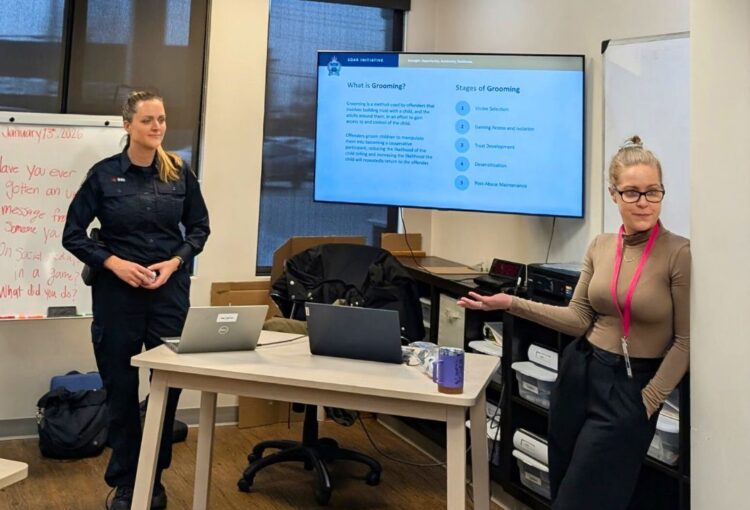
Sexual exploitation doesn’t happen randomly. Offenders use deliberate processes to find and manipulate vulnerable youth: targeting unmet needs, building false trust while isolating young people from healthy relationships, and using fear and guilt to maintain control. Understanding these tactics is the first step to dismantling them.
WHAT MAKES YOUTH VULNERABLE
- Unmet needs for safety, shelter, food, money, or belonging
- Isolation from family and healthy relationships
- Gifts, secrecy, or emotional manipulation that create a sense of debt or dependency
- Fear, threats, and guilt used to maintain control
Understanding Who Is Most at Risk
Sexual exploitation does not affect all young people equally. Systemic inequities mean that certain groups are overrepresented among exploited youth — not because of individual vulnerability, but because of broader structural failures.
YOUTH FACING HIGHER SYSTEMIC RISK
- Indigenous and Two-Spirit youth
- Youth in government care
- 2SLGBTQIA+ youth
- Youth experiencing housing instability or homelessness
- BIPOC youth
Why Many Youth Don’t Report
Silence after exploitation is not consent, indifference, or complicity. It is almost always the result of very real barriers that adults must work to understand and reduce. Many young people face a complex tangle of shame, confusion, and fear when it comes to disclosure:
BARRIERS TO REPORTING
- Fear and threats of retaliation or not being believed
- Shame and self-blame
- Confusion — grooming makes it hard to recognize abuse as abuse
- Fear of losing housing, safety, money, or supports
- Mistrust of authority or past system failures
- Stigma and fear of judgement
When youth feel believed, supported, and safe, they are far more likely to seek help. This is what awareness and community connection can shift.
City of Surrey Investment & the SEEN Project
In March 2025, the City of Surrey announced a $4.5 million investment over three years in youth resiliency programs, building upon the success of the Surrey Anti-Gang Family Empowerment (SAFE) program. This enhanced initiative expands services to proactively address risk factors including harm, victimization, and exploitation, with a broadened focus from gang violence to a more holistic model that empowers youth to overcome adversity and thrive in their communities.
As part of this initiative, Surrey Women’s Centre was awarded $300,000 annually for our SEEN Project (Support, Education, Empowerment, Navigation), which expands our organizational capacity to support youth survivors aged 13 to 24 who have experienced gender-based violence. Other recipients of the City’s investment include DIVERSEcity, Elizabeth Fry Society of Greater Vancouver, Family Services of Greater Vancouver, Pacific Community Resources Society (PCRS), and the Progressive Intercultural Community Services Society.
In partnership with the Youth Services Unit at Surrey Police Service, our SEEN Project supports vulnerable youth who may be or are at risk of experiencing sexual exploitation. Through SEEN, youth receive trauma-informed, client-centred support around safety planning, resource navigation, police reporting, and court accompaniment.
“The City of Surrey remains committed to cultivating resilient and thriving communities. Through this substantial funding, we are not only supporting programs but investing in the long-term prosperity and well-being of our residents—particularly our families and youth.”
— Mayor Brenda Locke, City of Surrey
Our Role: The Embedded Support Worker Model
Surrey Women’s Centre is proud to have Breeann Williams serving as an embedded support worker within the Surrey Police Service Youth Services Unit. Breeann works alongside Constable Melanie Ballard, SPS’s dedicated Youth Exploitation Liaison, bringing a community-based, trauma-informed lens directly into police work.
After each S.O.A.R. presentation, Breeann provides a safe, non-judgmental space for students who may need to disclose something, ask questions, or simply feel heard. This bridge between police and community support is essential. It means a young person who might not approach an officer in uniform has someone they can turn to.
Together, Breeann and Constable Ballard work closely with Surrey Schools and PCRS to provide immediate outreach and support for youth who are at risk of exploitation or trafficking. Their collaboration is a model of what it looks like when policing and social services work as genuine partners for youth wellbeing.
The S.O.A.R. presentations cover a comprehensive range of topics: what sexual exploitation and grooming are (including definitions, tactics, and real stories), consent and trusted adults, healthy relationships and warning signs, and what female roles can look like within gangs. The team also incorporates wellness education and positive affirmations, and ensures every student leaves with free resources, including connections to Surrey Women’s Centre, Kids Help Phone, Fraser Health, PCRS, the Canadian Human Trafficking Hotline, and the Suicide Prevention Hotline.
Exploitation thrives on secrecy and isolation. Every adult who understands these dynamics — every teacher, parent, coach, and service provider — becomes a protective force in a young person’s life.
What Awareness and Support Can Do
The presentations and provincial conversations this week are not just information-sharing exercises. When communities understand how exploitation works, what it looks like, and why young people don’t always speak up, they become better equipped to:
- Build trust — so youth know who to turn to before and during crisis
- Reduce stigma — so youth who have been exploited are not further harmed by shame
- Create safety — by identifying risk and intervening early
- Empower youth — by giving them language, skills, and agency
S.O.A.R. is part of a longer journey toward a Surrey where every young person has the knowledge and the connections to stay safer, and where every adult in their life is equipped to listen without judgment.
Learn More or Request a Presentation
To learn more about S.O.A.R., request a presentation for your school or organization, or access youth safety resources, reach out. For provincial resources on exploitation prevention, visit the BC Government’s community crime prevention page.
