Bearing the Weight: The unsustainable burdens on survivors and services
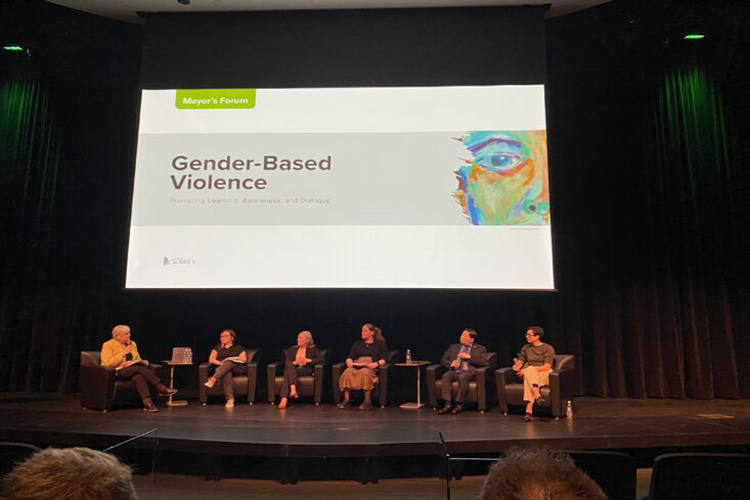
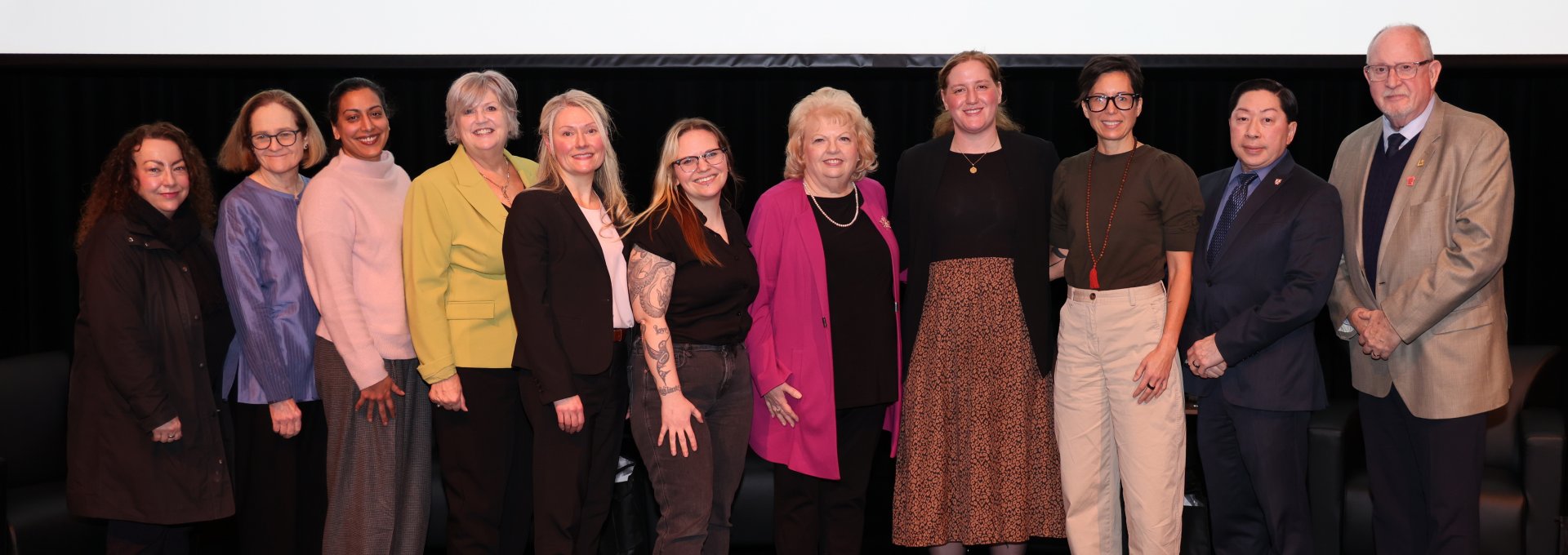
Last week, we were privileged to attend Mayor Brenda Locke’s Forum on Gender-Based Violence (GBV) and the launch of Frontline Workers on the Backburner: A Call for Systemic Accountability in the Gender-Based Violence Sector, a community-based research report by the Vancouver Aboriginal Friendship Centre Society (VAFCS) and SFU’s Faculty of Health Sciences.
Together, these events painted an undeniable picture: the systems and supports for survivors are buckling under rising need that vastly outstrips capacity, and the people holding them up are burning out.
“The sector is not functioning sustainably for frontline workers or survivors,” said Research Fellow Noemi Rosario Martinez, while Mary Point of the Musqueam Indian Band noted the “heavy lifting done every day against the waterfall of need.”
Funding and housing emerged as key themes at both events, and with good reason. Sector leadership and frontline staff were still processing the previous week’s provincial budget announcement.
In January 2025, British Columbia declared GBV an epidemic, along with its intent to address this public safety issue by focusing on housing and legal support for survivors. A year later, the budget has retroactively suspended the Community Housing Fund and ended the Supported Rent Supplement Program.
With projects stalled, non-profits and municipalities are facing enormous pressure to pivot, and the impact on survivors is not in question. We learned that:
- The City of Surrey has had 954 units of social and affordable housing postponed or cancelled, joining thousands of planned units that have been affected across the Lower Mainland alone.
- GBV is the primary cause of women’s homelessness in BC. Only 4% of women leaving violence move into safe and affordable long-term housing, while 75% continue to struggle or return to their abusers.
- Atira housed 250 women last year but had to turn away 3,000.
Amy FitzGerald, ED of the BC Society of Transition Houses, pointed out that “language matters, and here’s a list of words that did not appear in the budget: Intimate partner violence. Gender-based violence. Homicide. Femicide. Women.”
That “silence is a policy decision… survivors bear the weight of decisions made in rooms they will never be invited into,” said Sarah McIntosh, CEO at Atira Women’s Resource Society.
While the reality of urgency and weariness was acknowledged, so was gratitude. Appreciation was expressed for Dr Kim Stanton’s independent review of the BC legal system, the federal GBV Action Plan and funding, the ongoing work of the Gender Equity office to break down data silos, and BC’s Safe and Supported GBV Action Plan.
There was also a strong focus on prevention, resilience, and teamwork in these spaces. Not just within the anti-violence sector, but across systems and agencies.
“Ending gender-based violence will never be the responsibility of a single program, policy, or government agency. It requires all of us to be bold, collaborative, and willing to be vulnerable so we can be accountable,” said SWC’s own Samantha Grey, echoing the call that would sound at VAFCS.
Natalie Klaver of Surrey Police Services urged continued efforts on prevention, as did ex-Crown Counsel Winston Sayson, who also emphasized the change needed within the justice system:
“Are we placing too heavy a burden on victims, who are expected to not only tell their story over and over, but also bear the risk? Are we doing enough to make it less dangerous and difficult for women to leave abusive situations? Have we relied too much on the criminal justice system to fix these problems? Sentences are supposed to be deterrents. Do the sentences we see fulfil that role?”
Approaching the work through this multifaceted lens is crucial. We provide trauma-informed support and advocate for survivors alongside and within police, medical, government, and legal services. Our SEEN Project, funded by City of Surrey, equips youth to understand healthy relationships and identify red flags.
Like our sector peers, we have to hope that this foundational investment will be enough to counteract the resurgence of misogyny in younger generations and lead to fewer perpetrators and victims. But the challenges of supporting today’s survivors and staff are not getting any easier.
“Organizations are addressing a growing number of clients and increasing complexity of needs without a corresponding increase in funding. This critical underfunding, coupled with a short-term funding structure, put organizations in a position to barely cover administrative costs. Nonetheless, leaders and policy-makers reported a trend of funding shrinkage and cuts.” (Frontline Workers on the Backburner)
The GBV services sector has had to weather austerity before, and we know that collaboration and innovation are critical. In the absence of sustainable funding, we work together, get creative, and do what we can now for future change.
We keep showing up—in forums, research, schools, interviews, examinations, courtrooms, in community—because the human cost is one we refuse to pay.
We are immensely proud of Samantha Grey, our Director of Sexual Assault Services, who took part in the Forum’s panel discussion, and our Executive Director Shahnaz Rahman, who was on the Community Advisory Committee for this research project.